



This Google SEO search engine ranking optimization guide analyzes the importance of SEO in improving a website’s Google ranking and introduces on-page and off-page optimization, key factors such as code, website architecture, responsive design, server stability, internal linking logic, loading speed, and keyword placement. Furthermore, we explore the impact of brand social media exposure and content marketing on SEO, aiming to help businesses improve website visibility and business performance through strategies and techniques.
1 – What is Google SEO?
The Core Value of Google SEO
“Understanding the core value of Google SEO is the foundation for developing an effective optimization strategy.”
Google SEO (Search Engine Optimization) is a systematic process of optimizing website content, technical architecture, and external links to achieve higher rankings for target keywords in Google search results.
What is Website SEO?
In short, Google SEO (Search Engine Optimization) is a systematic process of optimizing website content, technical architecture, and external links through a series of strategic efforts to improve the search engine ranking of your target keywords in Google search results. This work is crucial for improving the effectiveness of Google SEO promotion, helping businesses achieve higher Google rankings, and ultimately, more targeted customer acquisition and business growth. Every leap in Google SEO keyword ranking means greater commercial value. Its commercial value lies in:
1. Traffic Multiplication Effect:
For every ranking increase, the average organic click-through rate increases by 30%, and the first page of search results accounts for more than 70% of total search traffic. This is crucial for improving Google SEO effectiveness.
2. Targeted Customer Acquisition Capability:
When users actively search for commercial keywords such as “wholesale Bluetooth headphones,” top-ranking websites can directly connect with customers who have a clear purchase intention. This is the core advantage of Google SEO in achieving targeted customer acquisition.
3. Business Necessity:
Professional SEO optimization requires 6-12 months to show stable results, but the conversion rate of high-quality traffic it brings is 3-5 times higher than that of advertising, which is the key reason why businesses are willing to invest long-term. This also illustrates that Google SEO is a task that requires patience and long-term commitment.
Differentiated SEO Strategies and Long-Term Value in Google SEO
Industry-Specific SEO Strategies
While Google’s official guidelines provide general optimization principles, different industry websites require customized solutions:
1. Media websites should focus on the timeliness of content and structured data tagging to increase news carousel display opportunities.
2. B2B corporate websites should optimize for industry-specific long-tail keywords (such as “industrial-grade 3D printer suppliers”) and strengthen the technical documentation support of their case study libraries.
3. B2C e-commerce platforms should focus on optimizing the schema tagging of product pages to ensure that information such as price and inventory can be crawled by Google Shopping.
Data shows that websites optimized for industry characteristics have 40% higher target keyword ranking stability than those using general optimization solutions.
A Two-Track System for Search Engine Optimization:
1. On-Site Optimization:
Technical Aspect: Implement Accelerated Mobile Pages (AMP) and optimize CLS layout stability (mobile compliance rate must be >90%).
Content Aspect: Establish a TF-IDF keyword matrix to ensure content deeply covers user search intent.
2. Off-Site Optimization:
Build authoritative industry backlinks (backlinks from .edu/.gov domains have 3 times the weight of ordinary links).
Brand keyword mentions (non-link brand exposure can increase brand keyword search volume by 17%).
In-depth Analysis of Google Ranking Algorithm and Continuous SEO Ranking Optimization
SEO ranking optimization is a task requiring patience and long-term investment, as it is closely related to the constantly evolving Google ranking algorithm. Google regularly updates its core algorithm; for example, Google Algorithm Update 2025 can impact existing Google website rankings. Century Xunke understands that maintaining improved Google rankings requires not only following general Google SEO guidelines but also continuously monitoring and analyzing algorithm changes and adjusting SEO professional service strategies in a timely manner. This ensures that website content and technology always meet Google’s latest requirements, thereby bringing continuous and high-quality search traffic to businesses.
The Synergistic Effect of SEO and Social Media
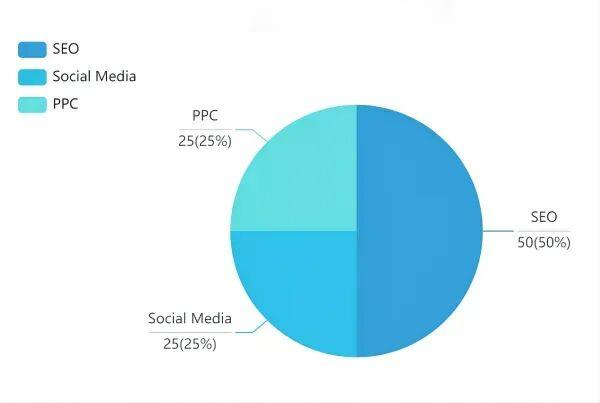
While social media can bring traffic, it has significant limitations:
● Passive push notifications result in lower conversion rates than search traffic (on average 2.8 times lower).
● High traffic volatility (algorithm changes can cause a 50% drop in daily traffic).
In contrast, SEO traffic offers:
● Precision: The conversion value of users searching for “commercial coffee machine repair” is 5 times that of users recommended through social media.
● Sustainability: High-quality rankings can be maintained for 18-24 months, with an average annual traffic decay rate of only 7%.
The Golden Combination Strategy of PPC and SEO
1. Short-Term Breakthrough:
- Test high-value keywords with PPC (keywords with CTR > 5% can be included in the SEO optimization list).
- Use ad conversion data to feed back into SEO content optimization (keywords with ad conversion rates > 3% should be prioritized for optimization).
2. Long-Term Strategy:
- After SEO stabilizes, the PPC budget can be reduced by 30-50% (for every 10,000 increase in organic traffic per month, ad spending can be reduced by $2,000).
- After the brand keyword ranks first in SEO, its PPC cost per click can be reduced by 60%.
Cost-Benefit Analysis
- PPC: Average cost of 2.5/click, 6-month cycle cost approximately 2.5/click, 6-month cycle cost approximately 150,000 (calculated based on 200 clicks per day).
- SEO: First-year investment approximately 80,000 (including technical redesign + content creation), maintenance cost drops to 80,000 from the second year (including technical redesign + content creation), maintenance cost drops to 20,000/year from the second year.
- ROI: Customer acquisition cost of SEO after 18 months is only 1/3 of that of PPC.
Businesses should establish a digital marketing system that combines “rapid PPC verification with long-term SEO retention” to capture the commercial intent behind search behavior and achieve a dual improvement in traffic quality and quantity. In a globally competitive environment, SEO optimization that meets Google’s E-A-T (Professionalism, Authority, Credibility) standards remains a core channel for acquiring high-quality international clients.
2 – Key Factors Affecting a Website’s Google SEO
“Understanding and optimizing the key factors affecting a website’s Google SEO is a crucial step in improving the ranking of an international trade website.”
2.0.1 – Concise and Accurate Code
Key Points for Website Platform Selection and Code Standards
Concise and accurate code is the foundation of good Google SEO, helping search engines crawl and understand the site.
Currently, mainstream website building solutions mainly fall into three categories:
1. SaaS Visual Platforms (Shopify/Wix, etc.)
- Suitable for quickly building e-commerce websites
- Low cost but limited secondary development
- Poor code standardization, common issues include missing tags
2. Open Source Systems (WordPress/Magento, etc.)
- Supports deep customization
- Requires a professional technical team for maintenance
- Also carries the risk of non-standard code
3. Self-Developed Websites
- Commonly found in technology service companies
- Complete control over code quality
- Highest development and maintenance costs
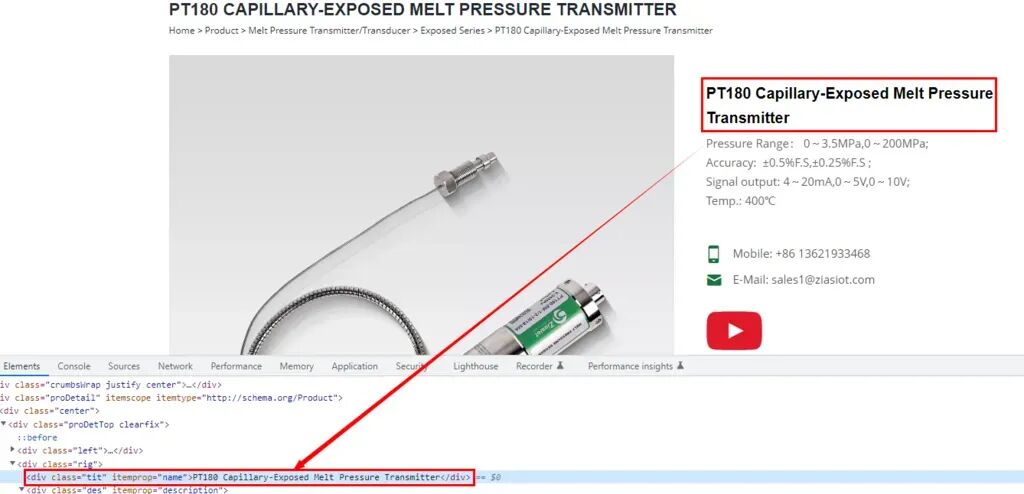
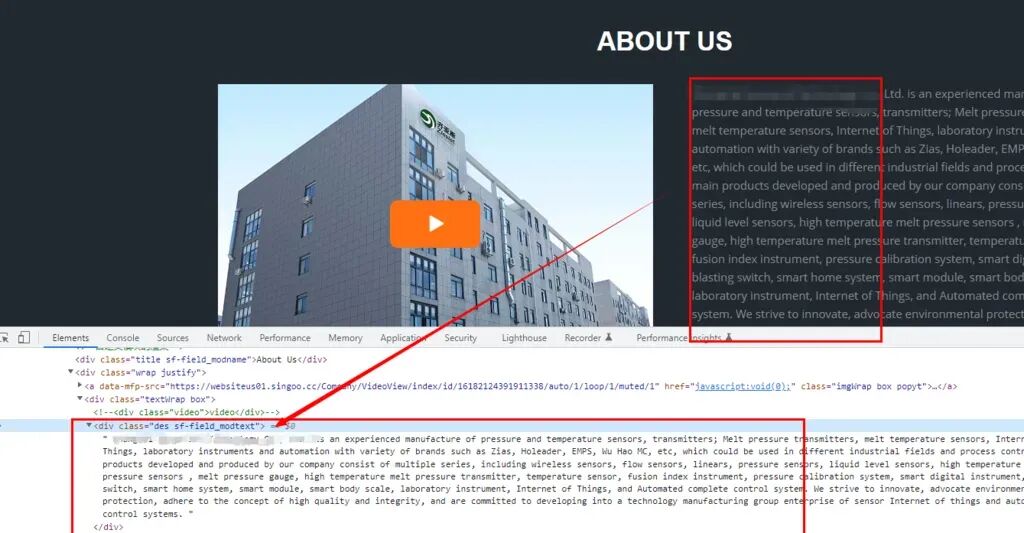
Special reminder: Regardless of the website building method used, ensure your HTML code is complete and conforms to standards, especially the proper use of H tags (H1-H6) and P tags. These tags not only affect page readability but are also crucial for search engines to determine content structure. Common SEO problems often stem from missing or misused tags; it is recommended to regularly check code integrity using W3C validation tools.
2.0.2 – Clear Architecture
“A clear website architecture not only improves user experience, but also helps search engines better understand the website’s content logic for Google SEO.”
Key Points for Optimizing Website Architecture
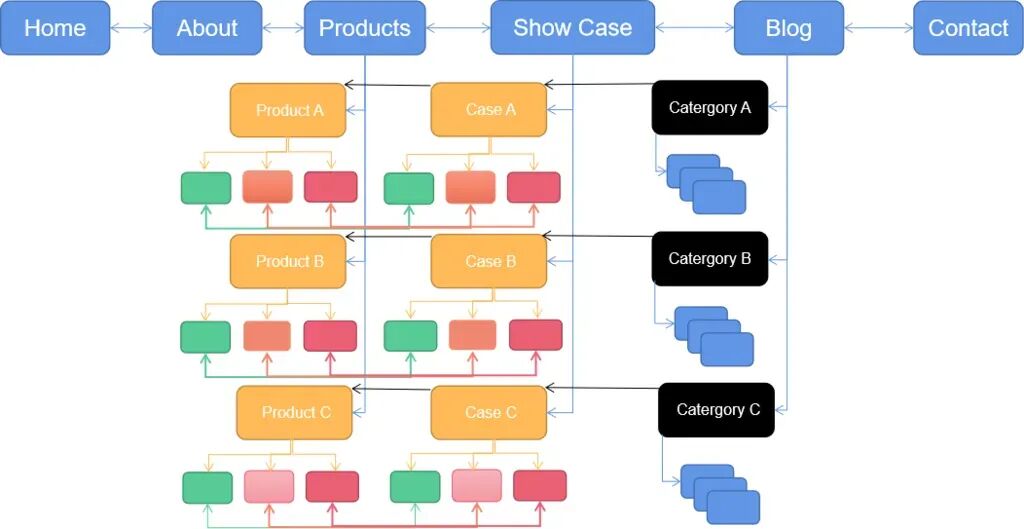
A clear website structure not only improves user experience but also helps search engines understand content logic. Core optimization strategies include:
1. Hierarchical Navigation Design
- The main menu should be consistent across the entire site to ensure quick navigation from any page.
- Add breadcrumb navigation to second-level and higher directories to clearly show the page hierarchy.
2. Content Association System
- Blog/case study pages should have tag functionality.
- Aggregate similar content through tags to form an internal link network.
3. Search Engine Friendliness
- Structured hierarchical relationships help crawlers understand the website’s content architecture.
- Related tags increase page crawling entry points and improve indexing efficiency.
This architecture acts as a “guide” for users and provides search engines with a clear crawling path, achieving a win-win situation for both user experience and SEO optimization.
2.0.3 – Responsive Websites
“Responsive website design is crucial for modern Google SEO, especially given Google’s push for mobile-first indexing.”
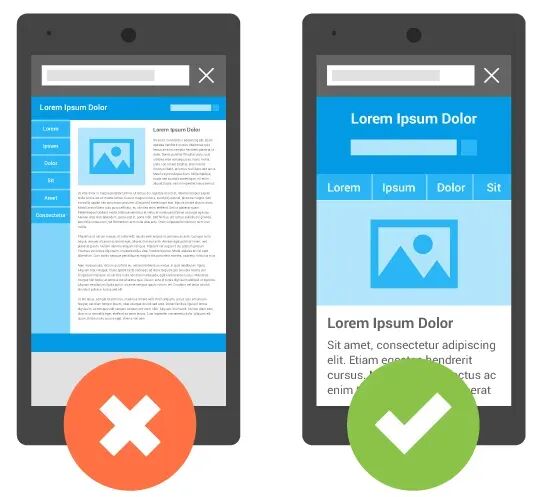
The Core Advantages and SEO Value of Responsive Websites
A responsive website is a website design method that uses intelligent layout technology to automatically adapt the same URL to different screen sizes on different devices (PC/tablet/mobile phone), maintaining content structure and readability. Its core features include:
1. Cross-device compatibility:
- Page elements (images/text/menus) dynamically adjust to screen size.
- Text size is automatically optimized, avoiding the need for manual scaling on mobile devices.
2. Technical features:
- Utilizes CSS3 Media Queries.
- Based on a Fluid Grid layout system.
- Media files (such as images) support adaptive scaling.
3. Core SEO value:
- Avoids the problem of duplicate content in traditional multi-version websites (same content, different URLs).
- Improves mobile user experience and reduces bounce rate (Google explicitly uses mobile-friendliness as a ranking factor).
- Social sharing traffic is unified and aggregated into a single URL, enhancing the page’s authority.
Google officially recommends responsive design as the preferred mobile optimization approach because it ensures a consistent user experience and best aligns with search engine crawling logic. Data shows that responsive websites have an average CTR (click-through rate) 30% higher in mobile search results than non-responsive websites.
2.0.4 – Server Stability and Settings
“Server stability and proper settings are among the most important technical factors affecting a website’s Google SEO performance.” A website’s server performance directly impacts search engine optimization results. Frequent server downtime or slow loading can lead to the following problems:
- Search engine crawling difficulties: Googlebot cannot access the website properly, reducing crawling frequency and impacting indexing efficiency.
- Deteriorating user experience: Visitors leave due to slow loading or inability to open pages, leading to an increased bounce rate.
Both of these issues send negative signals to Google, causing it to judge the website as of poor quality, thus dragging down SEO rankings.
Server Configuration and Indexing Issues
If, after submitting a page to Google Search Console, factors such as noindex and robots.txt blocking still prevent proper indexing (e.g., incorrect title/description or prolonged lack of indexing), the problem may be due to:
- Server configuration errors (e.g., incorrect HTTP status codes, redirect loops)
- Multiple rule conflicts (e.g., discrepancies between CDN caching and server settings)
These technical issues hinder search engines from understanding website content and require timely investigation and repair; otherwise, they will continue to negatively impact SEO performance.
2.0.5 – Logical Relationships of Internal Link Building
Optimize the website’s internal link structure to improve SEO page crawling efficiency.
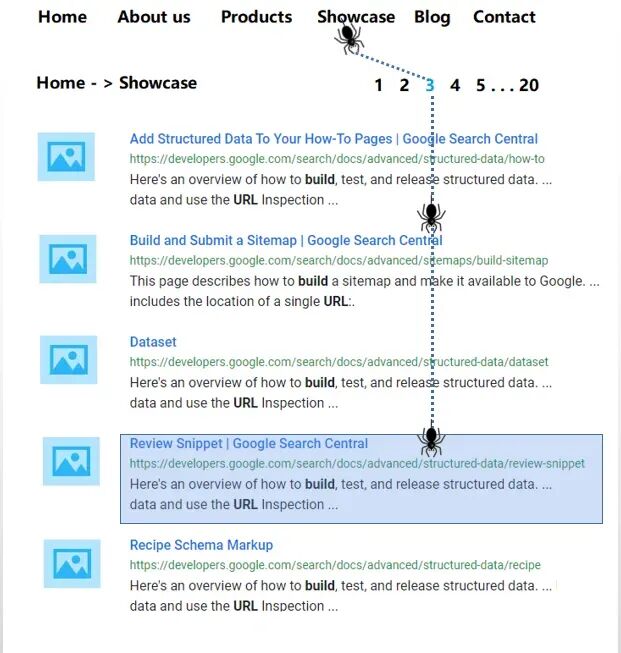
Although the website has a sitemap, it alone cannot form an efficient crawling network. The main menu is the primary path for search engine crawling, and its structure must be optimized to ensure that key SEO pages can be crawled smoothly.
Common Issue: Narrow Internal Link Paths
Taking Case A as an example, if the SEO target page is located in a third-level directory (e.g., Showcase → Page 3 → Page A), the search engine needs to traverse multiple levels to reach it, resulting in low crawling efficiency. Although choosing Page 1 may be better in the short term, new content will continuously push it to subsequent pages, leading to unstable long-term results.
Optimization Solution: Broaden the Crawling Path
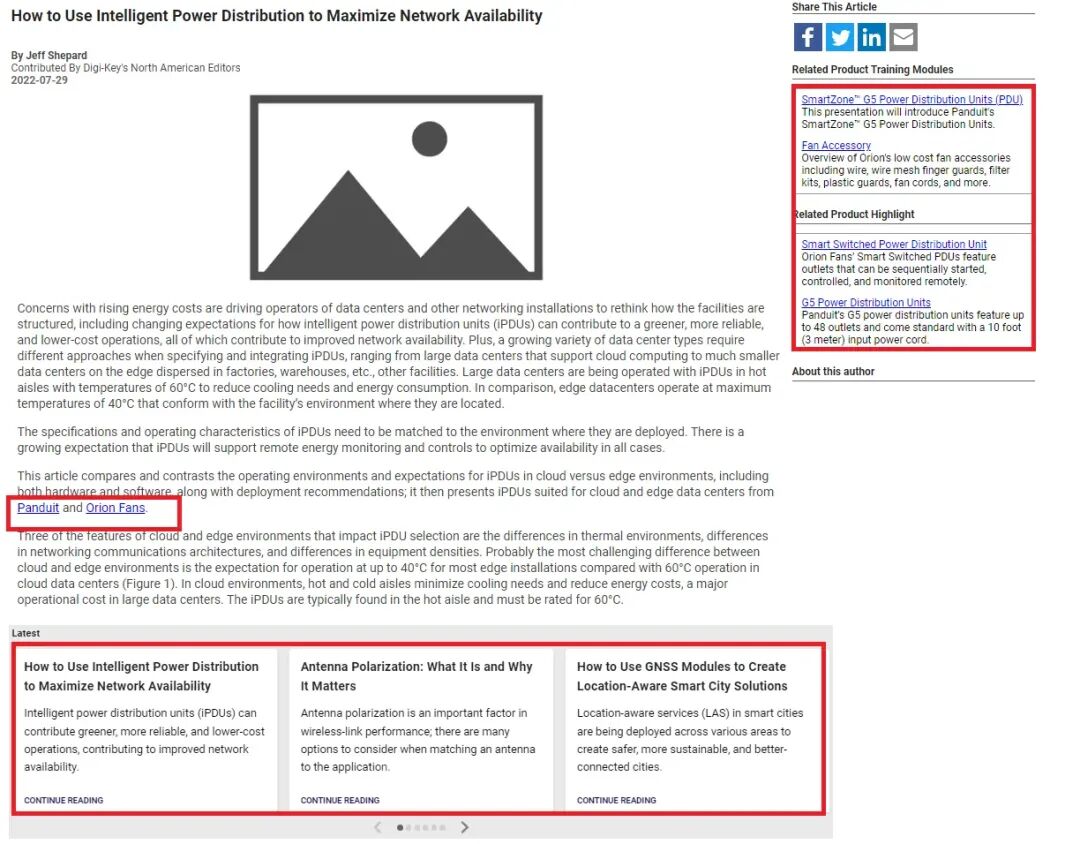
- Utilize related article recommendations: Insert internal links to the target page within popular content to increase entry points.
- Category Association: Establish horizontal links through popular categories or tags to shorten the crawling path (e.g., Case B).
A well-structured network of internal links can improve the crawling priority of SEO pages, avoid reliance on a single path, and thus enhance ranking stability.
2.0.6 – Website Access Speed
The Impact of Website Response Speed on SEO
“How fast should a website response speed be?” This question is like asking “How beautiful does a person need to be to be considered beautiful?”—it cannot be easily quantified. However, it is certain that speed directly affects user experience and SEO ranking.
Research data shows:
Content websites: A 1-second delay reduces article views by 4.9%; a 3-second delay reduces it by 7.9% (Financial Times test).
E-commerce websites: Walmart’s conversion rate is 1.9% when the page loads at 2.4 seconds; it drops to 1.5% at 3.3 seconds.
Amazon’s sales decrease by 1% for every 100 millisecond delay.
SEO Impact:
If a webpage loads slowly, resulting in a high bounce rate and short dwell time, Google will deem it less valuable, thus lowering its ranking. Therefore, optimizing speed not only improves user experience but is also a key factor in SEO.
2.0.7 – Keyword Layout
What are SEO keywords?
Keywords are words or phrases that users enter into a search engine. Search engines use these to match and recommend relevant results. Google’s leading position is due to its ability to accurately understand search intent and provide content that best meets user needs.
How to strategically place keywords on your website?
- Prioritize relevance: Keywords should be highly relevant to the page content. Refer to top-ranking competitor pages for inspiration.
- Distribute keywords appropriately: Naturally integrate keywords into the title (H1), subheadings (H2/H3), first paragraph, and body text. Avoid keyword stuffing, as this may be considered cheating.
- Enhance user experience: Optimize content as if you were treating a visitor, ensuring the information is genuine and useful. Using irrelevant keywords (such as “skirt” to drive traffic to “jeans”) will result in a high bounce rate and trigger a penalty from search engines.
- Structured content: Use a question-and-answer format, such as “5 keyword questions + 5 keyword answers,” to make the content clear and compliant with search logic.
A well-structured keyword strategy is the foundation for improving Google SEO keyword rankings, while high-quality content is the core of user retention. Through in-depth market research and Google SEO queries, you can identify the most valuable keywords and distribute them strategically, thereby achieving significant Google ranking optimization. We emphasize avoiding keyword stuffing and focusing on enhancing user experience by ensuring the authenticity and practicality of the content.
2.0.8 – Language Settings
Multilingual Website Optimization: Application and Considerations of the Hreflang Tag
Requirements for Multilingual Websites
If the target market covers multiple countries, the website needs to provide corresponding language versions so that users can easily access information in their familiar language. However, simply meeting user needs is not enough; optimization from a search engine (such as Google) perspective is also necessary to ensure that Google in different countries can accurately identify and crawl the correct language version. At this point, the Hreflang tag becomes a crucial tool.
The Role of the Hreflang Tag
The Hreflang tag is a recognition instruction designed by Google specifically for multilingual websites, used to guide Google in different countries to crawl the specified language version. Without this tag, search engines may crawl the wrong version; for example, when a Japanese user searches through google.co.jp, the Japanese page should be displayed, but the Chinese page is incorrectly ranked. Through the Hreflang tag, language and country can be accurately matched, for example:
- Specifying the English version for English-speaking countries such as the United States (google.com) and the United Kingdom (google.co.uk);
- Specifying the Traditional Chinese version for Hong Kong (google.com.hk) and Taiwan (google.com.tw).
Code Style Guidelines and Optimization
Hreflang tags must combine the language code (ISO 639-1) and country code (ISO 3166-1 alpha-2), for example: en-US (United States English), zh-TW (Taiwan Traditional Chinese). References:
- Language Code: ISO 639-1 standard
- Country Code: ISO 3166-1 standard
Important Notes:
- Add language versions as needed: This does not cover all countries; select based on your target market to avoid unnecessary translation costs.
- Avoid machine translation: Google can detect low-quality machine-translated content, especially descriptive sentences which are prone to grammatical errors, impacting user experience and SEO ranking. Human translation is recommended to ensure fluent, vivid, and professional language.
By using Hreflang tags appropriately and focusing on content quality, you can simultaneously meet user needs and optimize for search engines, enhancing the global competitiveness of your multilingual website.
2.0.9 – Canonical Settings
The Canonical tag (such as <link rel=”canonical” href=”canonical page URL”/>) is used to specify the “primary version” of a duplicate page, informing search engines which pages should be prioritized for indexing and ranking.
Core Uses
- Avoid Duplicate Content Penalties: When the same content generates multiple URLs due to parameters, Session IDs, etc., the Canonical tag prevents Google from mistakenly classifying it as a low-quality duplicate page.
- Center Page Authority: Consolidates scattered link weight onto the canonical page, improving its ranking performance.
- Save Crawling Resources: Reduces search engine crawling of invalid pages, optimizing website indexing efficiency.
SEO Impact
- Positive effects: Correct use can prevent content dilution and improve target page ranking.
- Incorrect risks: Incorrect tagging (such as pointing to a 404 page) may lead to indexing problems.
Applicable scenarios:
- Generating different URLs for products with multiple sizes/colors;
- Paginated content (e.g., ?page=2);
- Print/mobile versions of pages.
Canonical tags are an essential SEO tool that can efficiently manage duplicate content, but it’s crucial to ensure they point to the correct canonical page.
2.1.0 – SSL Security Certificates

What is an SSL certificate?
An SSL (Secure Sockets Layer) certificate is an encryption protocol used to protect the security of data transmission between websites and servers. When a user visits a website, SSL encrypts the communication content to prevent sensitive information (such as account numbers, passwords, and payment data) from being intercepted or tampered with by hackers during transmission.
Core functions:
- Data encryption: Ensures that the user’s private information (such as online banking passwords) cannot be cracked by third parties.
- Authentication: Verifies the authenticity of the website, preventing fake websites (phishing websites) from deceiving users.
- Increased trust: Browsers display a security lock icon, enhancing users’ trust in the website.
2. How SSL Certificates Work
SSL establishes a secure connection through the following steps:
- Browser initiates a request: When a user visits an HTTPS website, the browser requests a secure connection from the server.
- Server sends certificate: The website server returns a copy of the SSL certificate, containing the public key and website identity information.
- Browser verifies the certificate: It checks whether the certificate was issued by a trusted authority and is valid.
- Encrypted communication established: After successful verification, both parties use the public key to encrypt data, ensuring secure transmission.
Example: When you log in to online banking, SSL encrypts your account password. Even if the data is intercepted, hackers cannot decrypt the actual content.
How to determine if a website is using SSL?
Browser displays a lock icon: A lock icon appearing on the left side of the address bar indicates a secure connection.
- The URL begins with “https://”, not the insecure “http://”.
- Click the lock icon to view certificate details: This confirms the issuing authority and validity period.
Risks of not installing SSL:
- Data may be stolen (e.g., credit card information).
- Browsers will mark the website as “insecure,” reducing user trust.
- It will negatively impact Google search rankings (HTTPS is a crucial SEO ranking factor).
Why is SSL crucial for websites?
- Protecting user privacy: Preventing the leakage of sensitive information.
- Compliance requirements: Such as GDPR, PCI DSS (Payment Industry Data Security Standard).
- Improving SEO ranking: Google prioritizes HTTPS websites.
- Enhancing brand credibility: The security lock icon can increase conversion rates.
2.1.1 – Brand Social Media Exposure
The Benefits of Brand Social Media Exposure and Its Impact on Google Ranking
Brand social media exposure not only enhances brand image but also deepens user awareness of the brand through multi-dimensional information. When consumers consider purchasing, in addition to the official website, they often check user reviews and brand interactions on social media (such as Facebook, YouTube, LinkedIn, etc.) to comprehensively judge the brand’s credibility.
Google also obtains brand information from social media channels. If a brand remains active on multiple platforms, frequently interacts with users, and generates positive discussions, Google will consider the brand more authoritative, thus giving it a certain weight in the website’s SEO. Although social media exposure does not directly determine Google ranking, it can enhance brand trust, indirectly improving search ranking and click-through rate.
Key Findings:
- Enhanced Brand Trust: Social media exposure allows consumers to understand a brand from multiple perspectives, strengthening their confidence in making purchasing decisions.
- Google Trust Signals: Active social media performance improves brand authority and indirectly optimizes SEO performance.
- Long-Term Value: Continuously managing social media builds brand awareness, positively impacting search rankings and user conversion.
2.1.2 – Content Marketing
The Essence of Content Marketing and Google’s Evaluation Logic
The Core Value of Content Marketing
- Definition: Telling brand and product stories through text and images to build user awareness
- Google’s Perspective: Content quality directly affects ranking and must match search intent
- Current Issues: Most company product pages only provide parameter tables, lacking contextual descriptions (average word count <300 words)
Google’s Intelligent Evaluation Mechanism
- Anthropomorphic Thinking: Google’s algorithm understands, like a human, the following:
- Search Purpose (e.g., “water dispenser” defaults to C-end purchase needs)
- Content Depth (Top 10 pages average 1500 words + multimedia supplementary explanations)
Example of Precise Matching:
- Incorrect Practice: Wholesalers use “water dispenser” as the core keyword (matching C-end traffic)
- Correct Strategy: Use “water dispenser manufacturer/supplier” (precisely reaching B-end customers)
The Underlying Logic of Homepage Ranking
User Behavior Verification:
- 92% of clicks are concentrated on the first page (Advanced Web Ranking data)
- Average dwell time on homepage results > 3 minutes (performance in meeting user needs)
- Content Feature Analysis (based on YouFind’s 17 years of SEO experience)
| Misconceptions | Data Comparison | Optimization Solutions |
| “The parameter tables are professional enough.” | The average image-to-text ratio on the top 10 pages is 1:3. | Added usage scenario illustrations. |
| “Writing for Industry Experts” | Novice users account for >60% | Add a terminology explanation pop-up window |
| “Shorter is better” | 1500-word pages have a 27% higher conversion rate | Integrate customer testimonial videos |
Practical Suggestions
Content Optimization:
Essential Product Page Modules:
✓ Application Scenario Stories
✓ Comparative Evaluation Data
✓ Animated Demonstrations of Frequently Asked Questions
Search Intent Verification:
Target Search Keywords
Analysis of Top 5 Results:
- Content Type (Tutorial/Review/Product Page)
- Main Keyword Density
- Multimedia Usage
Industry data supports this:
Relationship between content length and ranking (SEMrush research):
- Pages with 1000-1500 words have a 40% higher probability of ranking in the top 3.
- Each additional infographic increases the share rate by 25%.
Key Findings
Google Priorities: Content must simultaneously meet the following criteria:
- Algorithm readability (keyword placement)
- Human readability (storytelling)
Special Note for B2B Companies: Industrial content should include:
- Simplified explanation of technical principles
- Production line video
- Industry solution white paper (PDF download)
Continuous Verification Method: Monthly comparison using Ahrefs:
- Content gap between your own and competitors’ content
- Timeliness changes in search intent
By transforming technical parameters into narrative expressions (such as “how the 304 stainless steel casing of this water pump can remain rust-free for 5 years in a saline-alkali environment”), both search engine understanding and user conversion rates can be improved.
Home/About content should include:
- Who we are
- What we offer
- Highlights
- Hot products/services
- Workflow
- Meet the experts
- Business partner
- Our story
- Patent/Certificate
- Why Choose Us
- How to order
- Latest Blog/New
- Comments from customer
- Factory & Facilities
Product Application:
- Material/Type:
- How it works:
- Industry Information:
- Examples of products/services:
- Benefits of products/services (list format)
- Data Report; Figure/Graphic:
- FAQ: Frequently Asked Questions about this product
- …
Case study content should include:
- The client’s background story
- What problem did the client encounter?
- How did you help the client solve the problem?
- The client’s satisfaction level with you
- …
In addition, blog pages are also a top choice for SEO because they allow for more extensive text, making it easier for Google to understand the information. Blog content marketing is just as effective as product pages. It’s recommended to use questions like “What,” “Why,” “Which,” and “How” to present your products, and to use location tags for each sub-topic so people can quickly find topics of interest.
2.1.3 – Fixed Update Frequency
Maintaining a fixed update frequency for a website plays multiple important roles in SEO optimization, user experience, and business development. The following is a detailed analysis:
SEO Optimization Aspects
Increase Search Engine Crawler Frequency
Regular updates attract search engine spiders to visit regularly, accelerating the indexing of new content (Google officially states that frequently updated websites are crawled more frequently).
Example: A blog updated every Wednesday will gradually develop a regular crawling habit.
Enhance Content Freshness Weight
Search engines (especially Google) prioritize displaying recently updated content, particularly for time-sensitive keywords (such as industry news and product reviews).
Optimize Long-Tail Keyword Ranking
Continuous updates cover more long-tail keywords; for example, “Latest SEO Tips for 2023” is more timely and competitive than “SEO Tips”.
User Experience Perspective
Cultivating User Visit Habits
A consistent update schedule (such as releasing industry reports every Friday) creates anticipation among users, increasing return visits. Data shows that regularly updated websites can increase user dwell time by 30%+.
Enhancing Brand Professionalism
Regularly publishing in-depth content (such as tutorials and case studies) can establish an authoritative position in the industry. For example, Vaxelabs publishes content daily.
Reducing Bounce Rate
New content encourages repeat visits from existing users, reducing “one-time visits.” Daily updates to promotional sections on e-commerce websites can increase page views by 15%+.
2.1.4 – User Experience
User experience (UX) and SEO are deeply intertwined. Search engines (such as Google) have incorporated user experience as a core ranking factor. The following outlines the specific mechanisms by which user experience impacts SEO and corresponding optimization strategies:
User experience directly impacts core SEO metrics:
Dwell Time
- Impact Mechanism: Users who quickly leave after clicking on a search result (low dwell time) are judged as having irrelevant content, leading to a drop in ranking.
- Data Support: Google patent documents mention that “long dwell time” may improve ranking (Source: Google’s “RankBrain” patent).
- Optimization Suggestions:
- Clear content structure (distinct subheadings, clear paragraphs)
- Add multimedia (videos, charts) to extend reading time
Bounce Rate
- Key Threshold: A bounce rate higher than 70% may be considered a low-quality signal by the algorithm (Data Source: SEMrush).
- Typical Case: E-commerce product pages can reduce the bounce rate from 80% to 45% by optimizing loading speed and adding related recommendations.
Pages/Session
- SEO Relevance: The more pages users visit, the higher the value of the website content, indirectly improving domain authority.
- Optimization Methods:
- Internal link strategy (each piece of content contains 3-5 related links)
- Add a “Related Recommendations” module
“Technical factors” of user experience and SEO
Page Load Speed (Core Web Vitals)
- Google’s Hard Standard: LCP (Maximum Content Rendering) must be <2.5 seconds, otherwise it will negatively impact mobile rankings.
- Real-world Impact: Walmart reduced its load time from 4 seconds to 1.7 seconds, resulting in a 20% increase in conversion rates (Source: Walmart Labs).
Mobile-First Adaptation
- Algorithm Penalty: Websites that fail the mobile-friendly test will see their mobile search rankings drop by 50%+ (Google official statement).
- Check Tool: Google Search Console’s “Mobile Availability” report.
HTTPS Security Protocol
- Ranking Weight: HTTP websites marked “insecure” by Chrome experience a decrease in user trust, leading to a 30%+ drop in CTR (Click-Through Rate).
The Hidden SEO Rules of Content Experience
Content Readability
- Algorithm Detection: Google uses BERT to understand natural language; obscure and difficult-to-understand content ranks lower.
- Best Practices:
- Paragraph length < 5 lines
- Use short sentences (average 15-20 words)
- Flesch readability score > 60
Search Intent Matching
- Failure Case: Pages listing the keyword “how to lose weight” that only show product ads (without providing methods) will experience a surge in bounce rate.
- Solutions:
- Analyze the top 10 content types in SERPs (tutorials/reviews/lists)
- Optimize content structure using “People Also Ask”
The SEO Impact of Behavioral Data (User Signals)
- Click-Through Rate (CTR)
- Title Optimization: Adding numbers/questions (e.g., “5 Tips”) to the Meta Title can increase CTR by 20-30%.
User Interaction Behavior
- Scroll Depth: Pages viewed more than 50% are considered more valuable (monitorable via Hotjar).
- Optimization Case Study: A/B testing shows that adding directory navigation increased the average scroll depth of pages from 40% to 75%.
| Problem Type | Diagnostic Tools | Optimization Solutions |
| High bounce rate | Google Analytics | Improved first-screen content appeal + added clear CTA buttons |
| Low dwell time | Search Console | Add case studies/data visualizations |
| Poor mobile user experience | Lighthouse test | Enable AMP/Optimize image size |
| Content is difficult to understand | Hemingway Editor | Simplify sentence structure + add terminology explanations |
2.1.5 – Visitor Behavior
User behavior refers to all user interactions and data traces while visiting a website. This behavioral data not only directly reflects the quality of user experience but is also a core decision-making basis for search engine optimization (SEO) and business conversion: Specific types of visitor behavior and their technical collection methods
Click Stream
- Recorded Content: Links, buttons, and navigation menus clicked by users
- Tools: Google Analytics event tracking, Hotjar click heatmap
- Example Data: Homepage banner click-through rate increased from 15% to 25%, demonstrating the effectiveness of design optimization.
Time on Page
- Algorithm Correlation: Google RankBrain classifies a dwell time >3 minutes as a high-quality signal.
- Outlier Handling: A single-page dwell time >10 minutes may indicate that the user left the page without closing it.
Scroll Depth
- Monitoring Dimensions: Four key scroll points: 25%/50%/75%/100%
- Optimization Case: Adding a “Back to Top” button increased the complete content read rate by 40%.
Conversion Path
- Typical Path: Search → Product Page → Shopping Cart → Payment (Average 2.7 visits required)
- Breakpoint Analysis: 70% of user churn occurs on the shopping cart page → Shipping fee display needs optimization.
The Core Role and Commercial Significance of Behavioral Data
Impact on Search Engines
- Ranking Signals: Google patent US20200364284A1 explicitly incorporates “user behavior-based ranking” into its algorithm.
- Negative Case: An e-commerce website experienced a 30% drop in core keyword rankings due to 50% of users immediately returning after searching (low dwell time).
Guidance for User Experience Optimization
- Heatmap Application: Clicks on the “Contact Us Now” button were concentrated on the right side → Moving the button to the right increased conversion rate by 18%.
- A/B Testing: Version A (long form) conversion rate 5% vs. Version B (step-by-step form) conversion rate 12%.
Validation of Content Strategy
- Behavioral Funnel: Blog → Product Page bounce rate less than 1% → Need to strengthen product relevance within content.
- Read Completion Rate: Technical articles have an average completion rate of only 35% → Need to add charts/simplify terminology.
Deeper Information Reflected in Behavioral Data
User Intent Authenticity
- Search Term vs. Behavioral Differences: Searching for “high-end headphone reviews” but quickly closing the page → Actual need may be “purchase” rather than “reading”
- Solution: Add a “Buy Now” shortcut to the review page
Website Information Architecture Issues
- Behavioral Patterns: Frequent use of site search → Navigation system malfunctions
- Data Support: 30% of site search keywords are “contact information” → Customer service entry needs to be highlighted in the navigation bar
Differences in User Experience Across Devices
- Mobile-Specific Behavior: Accidental touch rate of finger swipes is as high as 15% → Button spacing needs to be adjusted
- Cross-Device Comparison: Average order value on desktop is 120 vs. mobile is 80 → High-end product lines are not displayed on mobile
Key Behavioral Metrics and Optimization Comparison Table
| Behavioral Indicators | Health Thresholds | Optimization Directions | Recommended Tools |
| Average session duration | >2 minutes | Add interactive elements (Q&A/calculator) | Mixpanel |
| Page bounce rate | <50% (content page) | Improve information density on the first screen | Crazy Egg |
| Conversion funnel drop-off points | <30% drop-off at each step | Simplify process/Add trust indicators | Kissmetrics |
| Content scroll depth | >60% to reach the bottom of the page | Segmented layout/Insert interactive anchors | Scroll Depth Tracker |
3 – What is the general process for doing Google SEO?
1.Having a basic understanding of the overall situation of the website.
| Query Content | Item List | Reason or Function |
| 网站 | Website Performance Values | SEO tools can be used to check various metrics, such as DR (Direct Traffic), UR (Ultimate URL), number of keyword rankings, traffic sources, number of backlinks, etc. |
| Responsive Website Design | Google will no longer index PC websites that are not mobile-friendly. | |
| Clear Website Architecture | Can search engines understand the hierarchical structure and logical relationships? | |
| Domain Age | Domains older than one year are more suitable for Google SEO than new domains. | |
| Domain Current Authority | This can be used to measure website authority and the difficulty of promotion. | |
| Number of Indexed Pages | This depends on the size of the website’s existing architecture. A preference is given to large, high-quality websites. | |
| Originality of Website Content | Insufficient originality may lead to being considered plagiarism and resulting in a lower search ranking. | |
| Competitor Website Performance | Understand the types of competitor websites, their optimization strategies, and the differences between them and their competitors. |
3. Based on your website’s authority, assess which Google SEO keywords you can target within your budget and set reasonable KPIs.
3.2 – Detailed Website Analysis
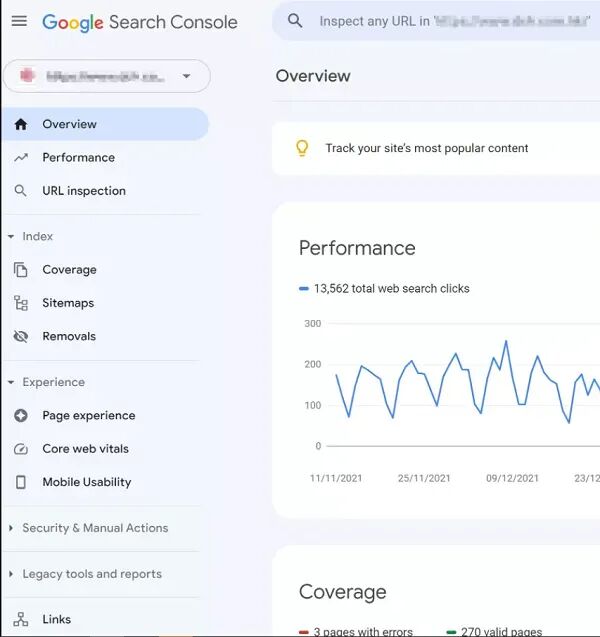
1. Use Google Search Console to view website performance reports.
When conducting detailed website analysis, you should first make full use of Google Search Console. This is a free Google SEO tool provided by Google, allowing you to view website performance reports, such as the number of impressions and clicks of traffic keywords, the number of valid indexed pages, error pages, website backlinks, and mobile device compatibility. Through Google’s indexing query function, you can understand in real time whether your website pages are being indexed correctly by Google, which is crucial for continuous SEO ranking optimization. Examples include: the number of impressions and clicks of traffic keywords, valid indexed pages, error pages, website backlinks, and mobile device compatibility.
1. Google Search Console
| Query Content | Item List | Reason or Function |
| Website Crawling Path | Website Architecture | Can search engines crawl the site smoothly and access all pages?
(Note: Handling page redirects and dead links; keeping URLs to 3 levels or less is recommended.) |
| Inlink | ||
| sitemap.xml | ||
| robots.txt | ||
| Access speed | image size | A faster website loads improves user experience and Google’s crawling speed.
If the website loads too slowly, Google will have difficulty crawling it and will leave the site. |
| Javascript | ||
| CSS | ||
| Original content | Canonical Tag
301 Redirect |
If duplicate content cannot be avoided, tell the search engine which version of the URL you want to display. |
| necessary elements | Title | Essential SEO elements for a website |
| Description | ||
| H1 Tag | ||
| Keywords 分布 | ||
| Image Alt Tag | It allows search engines to understand what an image is about. | |
| Hreflang Tag | Let the search engine know the language version for different countries. | |
| Breadcrumb |
Declare the website’s hierarchical structure to Google |
|
| server | Server Location | Google recommends local websites based on the customer’s location, so the server location needs to match the customer’s location. |
| SSL security certification | Helping you build trust with customers |
3. After the inspection report is released, you need to determine the optimization projects and assess the impact of optimizations that cannot be done on Google SEO. You don’t need to complete all content optimization before doing Google SEO; optimization is not something that can be achieved overnight. Some optimizations need to be determined based on the performance during the promotion process.
3.3 – Keyword Selection
1. Determine key keywords based on the website’s existing products.
2. Use Google AdWords recommendations to obtain expanded keywords for the key keywords.
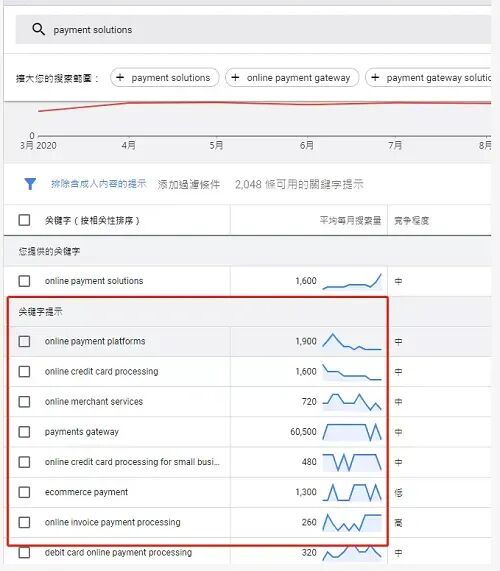
Google Ads Keyword Search Volume Inquiry
3. Use tools to check competitors’ keyword activity. Tools available include Semrush, Ahrefs, and SimilarWeb. Many such tools can be found in Vaxelabs’ SEO Keyword Planning section.
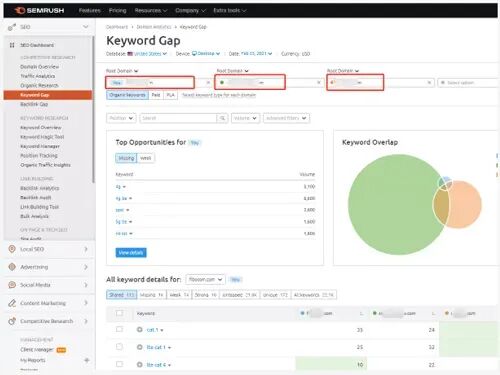
SEM Rush Competitor Comparison
4. Expanding Keywords via Search Engine Drop-down Menu
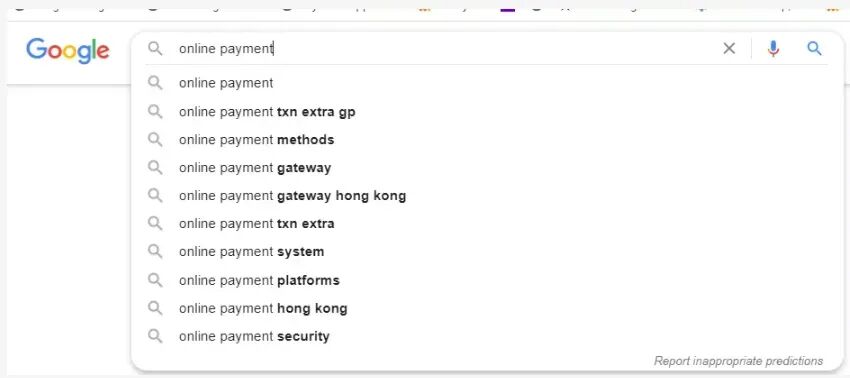
Google search pull-down list
5. Keywords searched by other people
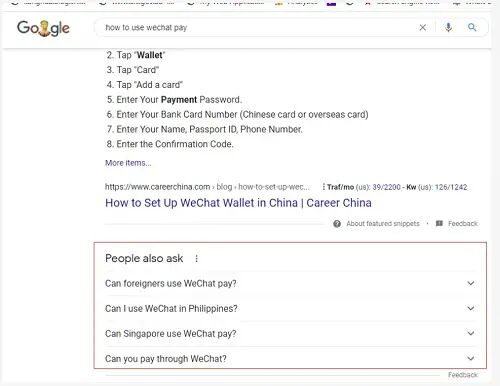
Google search Pople also ask
6. Related search keywords
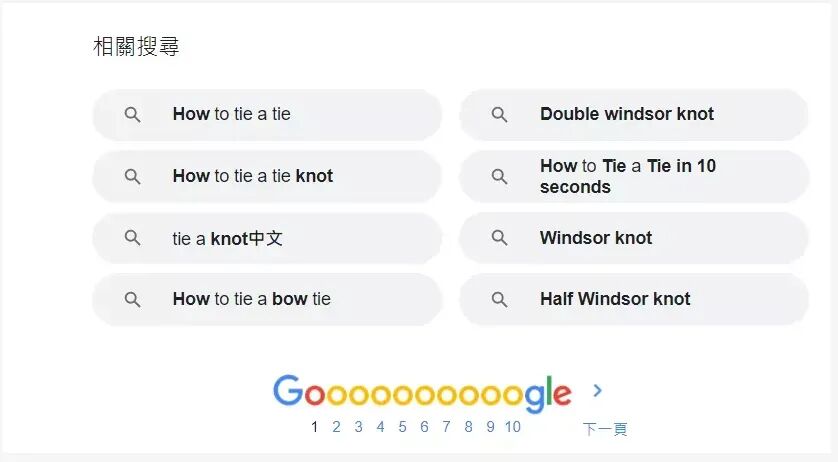
Google search related searches
3.4 – Choosing Landing Pages
The number of keywords should be determined based on the website’s existing page capacity. Generally, optimizing 1-3 core keywords per page is sufficient.
Key Principles:
- Avoid blind keyword stuffing: Don’t select a large number of keywords at once without sufficient pages to support them, leading to scattered optimization and decreased effectiveness.
- Prioritize content matching: Ensure each keyword has a corresponding landing page, and the content must accurately cover the user’s search intent.
- Quality > Quantity: Focus on high-value keywords and improve the relevance of pages to search needs, rather than pursuing quantity.
Properly planning keyword and page matching is crucial for effectively improving SEO results.
3.5 – Keyword Integration
Website optimization and keyword selection can be carried out simultaneously. Integrating target keywords during the optimization process can accelerate on-site SEO progress. After optimization, Google SEO tools (such as Google Search Console, Ahrefs, etc.) should be used to check if it meets promotional standards.
Key Points:
- Collaborative Optimization: SEO companies alone cannot guarantee optimal results; continuous collaboration on content updates is necessary to ensure consistency with the keyword strategy.
- Tool Verification: Regularly check rankings, traffic, and other data to adjust the optimization direction.
- Long-Term Maintenance: SEO is an ongoing process; content needs to be updated in conjunction with company business to maintain competitiveness.
Effective Google SEO relies on “technical optimization + content collaboration,” and continuous optimization using tools.
3.6 – Building High-Quality Backlinks
Backlinks (external links) are cross-domain links from other websites to your website, acting like international routes to build traffic channels. High-quality backlinks can improve a website’s authority and ranking in Google, but low-quality sources (such as pornographic, gambling, or spam backlinks) should be avoided.
Key Points:
- Quality First: Backlinks should come from relevant, high-authority websites, not just focus on quantity.
- Index Effectiveness: Only backlinks indexed by Google count towards your website’s ranking.
- Long-Term Strategy: Backlink building needs to be continuous, combined with content marketing for organic growth.
Backlinks are a crucial part of SEO, but the source must be carefully selected.

